
Scientific Presentation
Epinephrine Nasal Powder – A sustainable and reliable option for the treatment of anaphylaxis
Purpose
Orexo is developing OX640, a preservative-free nasal epinephrine powder formulation for treatment of anaphylaxis, designed to be stable across a wide temperature range and to have a prolonged shelf-life compared to liquid formulations. This work investigated stability of the powder formulation in comparison to a commercial autoinjector. From a sustainability perspective, OX640 offers potential advantages in terms of material use, expiration date, and waste reduction thanks to its novel powder formulation and needle-free design.
Methods
The OX640 formulation included 1 mg of epinephrine, along with trehalose, maltodextrin and sucrose laurate and was produced by an optimized spray-drying process. The powder was filled into a unidose nasal powder delivery system (Aptar Pharma, France) with a fill weight of 25 mg and placed in protective storage tubes with desiccant. Stability (epinephrine content, enantiomeric proportion and epinephrine degradation) of OX640 and the autoinjector was evaluated using HPLC-UV methods under accelerated storage conditions (40°C/75% RH) and under extreme conditions (50°C at ambient RH) for 6 months (OX640 only).
Results
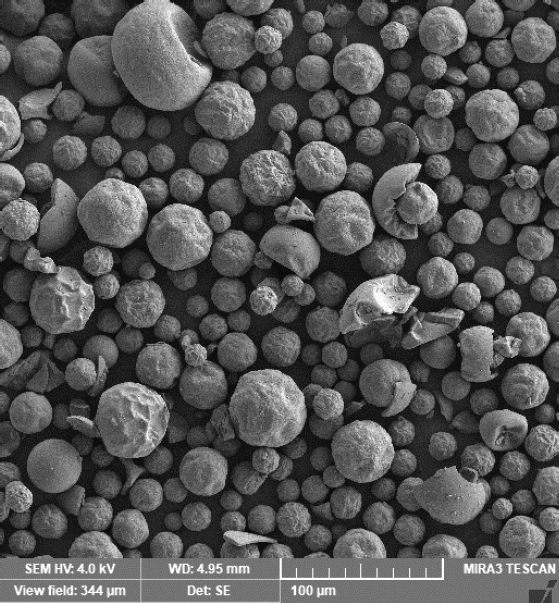
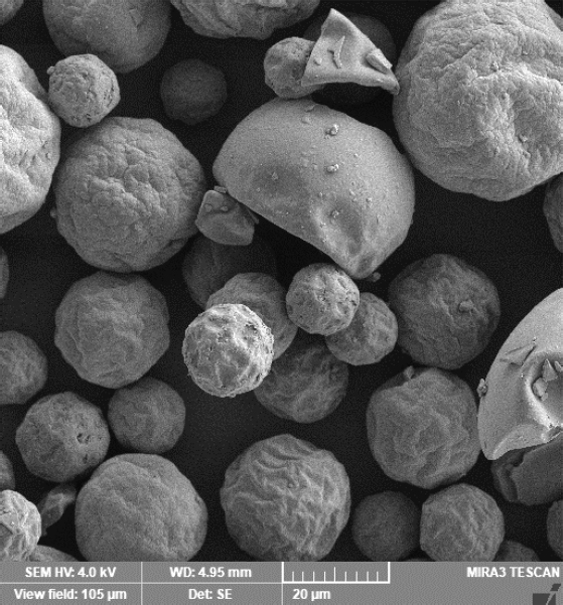
The spray drying process yielded a free-flowing, rapidly dissolving powder with a narrow particle size distribution, optimal for nasal deposition (10-100 µm). OX640 exhibited minimal degradation and racemization of epinephrine for up to 12 months, whereas the autoinjector showed a decrease in assay from 105% to 73% and an enantiomeric purity of only 76%, resulting in a nominal dose of approximately 55% after 12 months, Figure 1 and 2. Even at 50°C, OX640 remained remarkably stable with less than 1% total degradation, still delivering the full dose without the need for antioxidants or preservatives, Table 1. SEM images can be seen in Figure 3.
Figure 1
Degradation of epinephrine expressed as epinephrine content in relation to target dose (%) after storage at 40°C and 75% relative humidity

Table 1
Stability of OX640 stored at 50°C for 6 months.
| Initial | 1 M | 3 M | 6 M | |
|---|---|---|---|---|
| Epinephrine content (%) | 99.6 | 100.3 | 100.7 | 99.9 |
| Epinephrine degradation (%) | ≤0.10 | ≤0.10 | 0.27 | 0.57 |
Figure 2
Enantiomeric purity/content in percentage after storage at 40°C and 75% relative humidity after 12 months. R-epinephrine is the native and active form of epinephrine, while S-epinephrine is inactive (~10% rel. activity).

Figure 3
Scanning Electron Microscope (SEM) images of one typical batch of OX640 at two different magnifications.

Robert Rönn
PhD, Senior Vice President Head of R&D
robert.ronn@orexo.com
+46 (0) 18 780 88 00

Jonas Sävmarker
PhD Scientific Director R&D
jonas.savmarker@orexo.com
+46 (0) 70 537 75 77
Conclusions:
The OX640 epinephrine nasal powder provided superior stability compared to the autoinjector, providing for longer shelf-life and less strict storage conditions. This may benefit patients with risk of anaphylaxis by reducing the need for refills and ensuring access to effective, non-degraded medication when needed.
Meet Orexo at the following scientific conferences
Dec. 9-11 Drug Delivery to the Lungs Conference 2026, Edinburgh, Scotland
Nov. 12-16, 2026 ACAAI, American College of Allergy, Asthma & Immunology's Annual Scientific Meeting, Phoenix, Arizona
Nov. 9-11, 2026 Bio-Europe 2026, Cologne, Germany
Oct. 29-30, 2026 PODD 2026, Boston, MA
Conference link
Oct. 19 -21, 2026 World vaccine conference 2026, Amsterdam, Netherlands
Sep. 16 -17, 2026 IPAC-RS 2026 Nasal Innovation Forum


